

IPSNEWS
COFEPRIS optimizes the Advertising Notice for cosmetic products
As of July 15, 2026, the Federal Commission for the Protection against Sanitary Risk (Cofepris) and the Digital Transformation and Telecommunications Agency (ATDT) enabled an improvement in the DIGIPRIS platform that allows companies in the cosmetic sector to select multiple distribution channels in a single Advertising Notice for Cosmetic Products per brand.

Regulatory Guide: Cosmetic labeling requirements in Mexico
Cosmetic labeling is one of the key elements for demonstrating regulatory compliance while providing consumers with clear and accurate product information.
NOM-141-SSA1/SCFI-2012 establishes the sanitary and commercial labeling requirements applicable to prepackaged cosmetic products marketed in Mexico.

How to classify a cosmetic product in Mexico: a regulatory case study
One of the most common mistakes when introducing a cosmetic product into the Mexican market is assuming that its regulatory classification depends solely on its formulation.
In this article, we analyze a case study that reflects a common situation faced by international manufacturers seeking to introduce cosmetic products into the Mexican market.
New COFEPRIS Guide: Optimization and agility in the Sanitary Registration of Medical Devices
Seeking to unify current Equivalence Agreements and the Abbreviated Regulatory Pathway, the Federal Commission for Protection against Sanitary Risks (COFEPRIS) has published the Requirements Guide for the Sanitary Registration of Medical Devices.
Dietary Supplement classification: Scope of the new COFEPRIS Guide
COFEPRIS has published the "Non-Regulatory Guide for the Classification of Products as Dietary Supplements." This technical document compiles the requirements of national legislation through a self-assessment format and a decision-making diagram to determine whether a product belongs in this category.
RAUpdate: Prohibition of Erythrosine (Red 3 FD&C) in the Mexican Food Industry
The Mexican Ministry of Health (Secretaría de Salud) has issued an Agreement to eliminate the use of the coloring agent Erythrosine and its lakes (Red 3 FD&C) in food, beverages, and dietary supplements. This measure responds to a risk analysis that determined that the population's exposure exceeds internationally established safety limits.
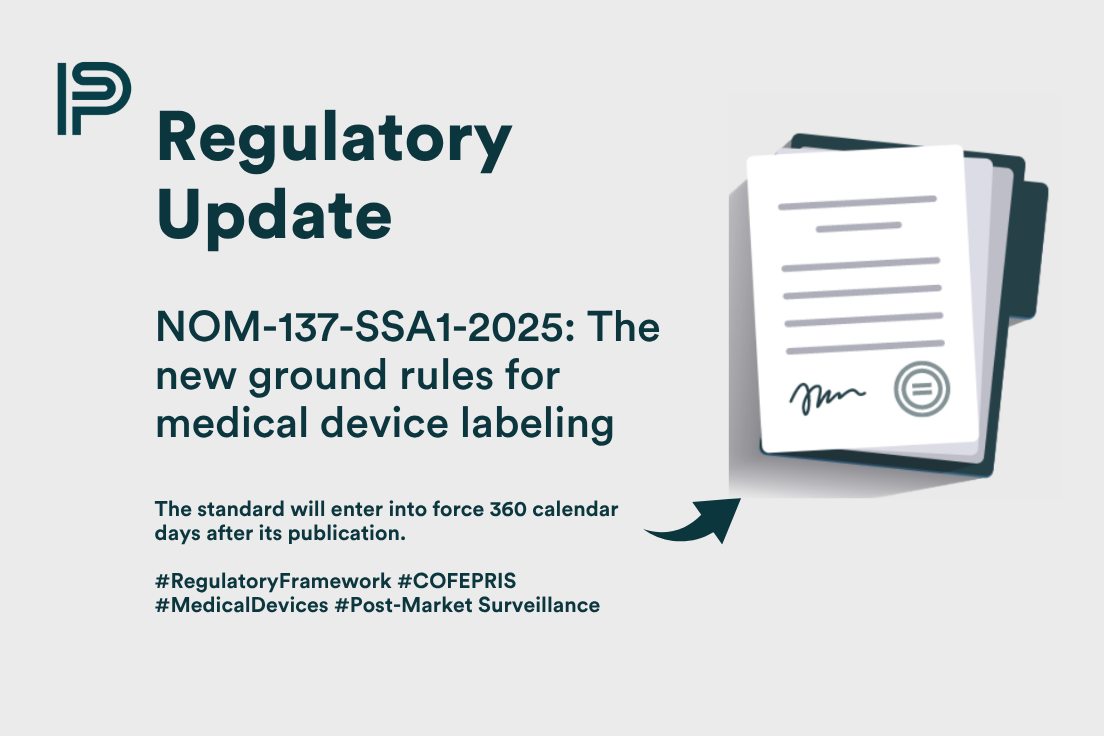
RAUpdate New NOM-137-SSA1-2025: Requirements for Medical Device labeling in Mexico
On May 19, 2026, Mexico's Ministry of Health published the new NOM-137-SSA1-2025 in the Official Gazette of the Federation (DOF), which completely replaces the version in force since 2008.
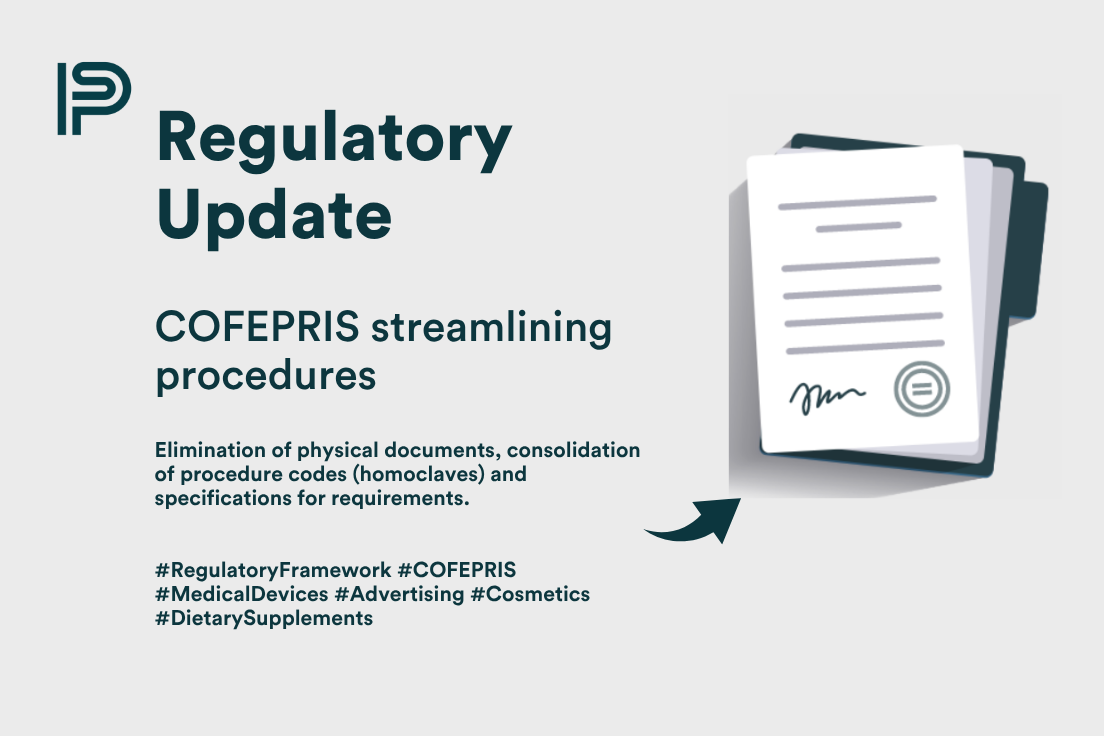
RAUpdate Administrative modernization of COFEPRIS: Streamlining procedures
The administrative reform published on May 4, 2026, is focused on the digitalization and operational efficiency of The Federal Commission for Protection against Sanitary Risks (COFEPRIS). The analysis covers the elimination of physical requirements, the consolidation of procedure codes (homoclaves) regarding advertising, and the acceleration of medical device procedures.
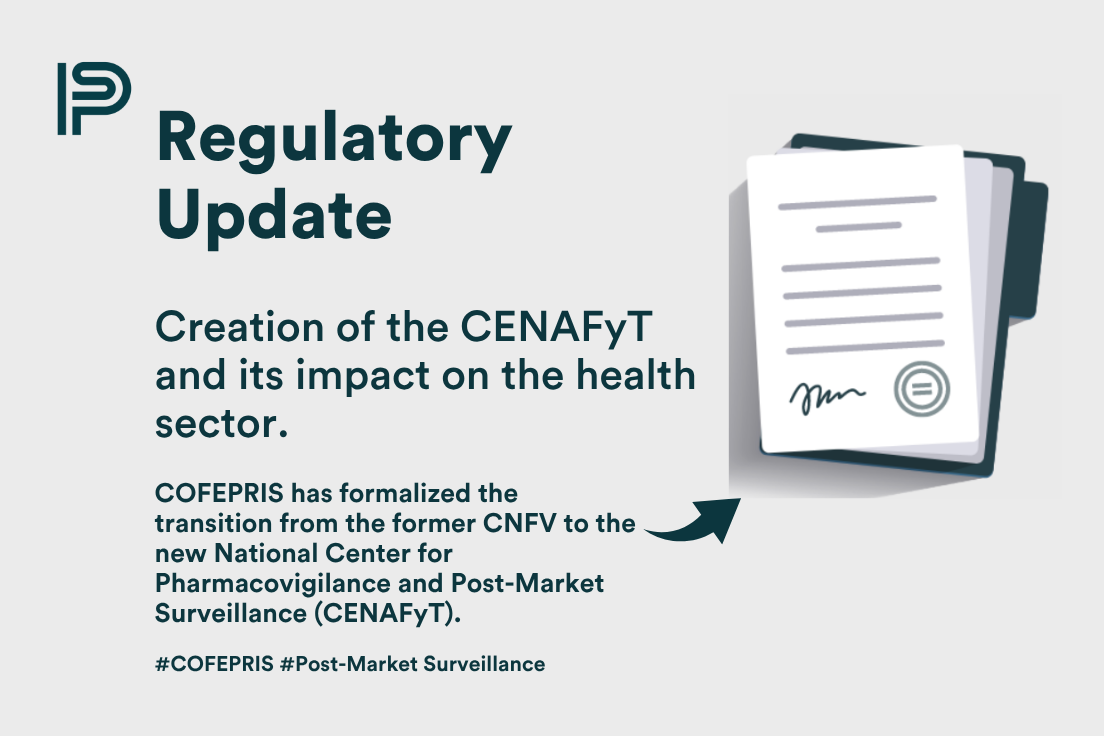
RAUpdate: Creation of the CENAFyT and its impact on the health sector.
On March 9, 2026, COFEPRIS officially announced the creation of the National Center for Pharmacovigilance and Technovigilance (CENAFYT). This body emerges not as an isolated entity, but as the strategic evolution of the former National Pharmacovigilance Center (CNFV), following the legal modifications made to the General Health Law at the beginning of 2026.

Frequent errors when applying for a Sanitary Import Permit before COFEPRIS through VUCEM
This article explains the most common mistakes when applying for a Sanitary Import Permit before Federal Commission for the Protection against Sanitary Risks (COFEPRIS) and how to prevent them. It is aimed at importers of regulated products and seeks to help them avoid warnings, rejections, and delays in their procedures.